


AI-generated visualization of Blumrich’s proposed landing craft — not an ancient image, historical photograph, exact engineering blueprint or evidence of extraterrestrial contact.
Ezekiel’s vision is one of the most frequently discussed ancient texts in the UFO literature. Its wheels within wheels, fire, living creatures and throne above a firmament have inspired both religious interpretation and a striking technological hypothesis. The distinction matters: an ancient account exists; an extraterrestrial landing has not been established.

The ancient account: approximately 593 BCE
In Ezekiel 1, the prophet places his vision among the exiles by the river Chebar in Babylonia, conventionally dated to approximately 593 BCE. He describes a storm wind, a great cloud, brightness and fire; four living creatures; and wheels that move with them without turning. The chapter culminates in a throne-like appearance and the glory of the Lord. Ezekiel 10 revisits the imagery and identifies the creatures as cherubim.
The account belongs to a prophetic and theological work, not a modern technical incident report. Its imagery is central to Jewish throne-chariot (merkabah) traditions. Reading it as machinery is a later interpretation, which should be compared with its original literary and religious context. Explore our Ancient History timeline and Ancient Astronauts overview for related material.
Josef F. Blumrich: the engineer behind the hypothesis
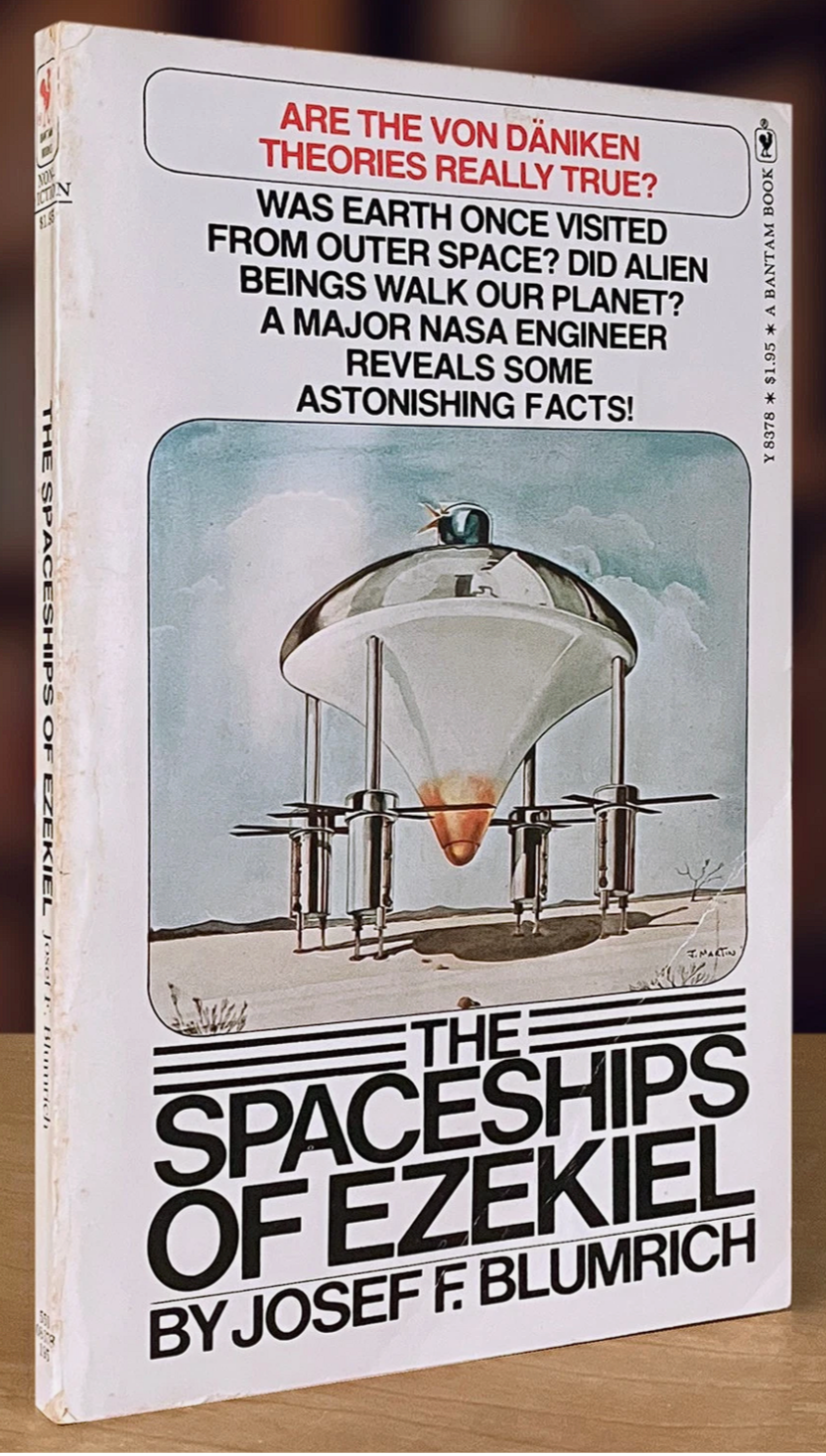
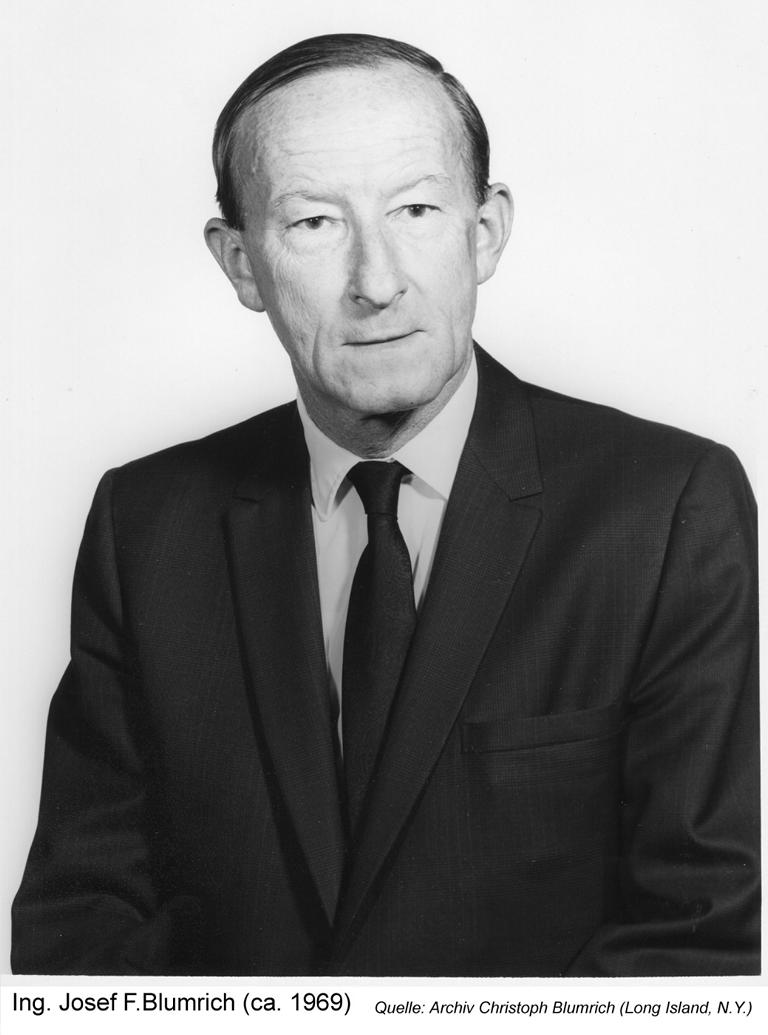
Josef F. Blumrich, author of The Spaceships of Ezekiel (1974), was an Austrian-born aerospace engineer who headed the Systems Layout Branch at NASA’s Marshall Space Flight Center. His aerospace background included Saturn V structural design and participation in Skylab’s design. His engineering career helps explain why his proposal drew attention; those credentials do not make his interpretation a NASA finding.
His proposed machine
Blumrich interpreted Ezekiel’s vision as a landing craft with a broad, roughly conical central body, a command capsule on top, four helicopter-like rotor units, mechanical arms, and telescoping landing legs with round footpads. He treated descriptions of motion, sound and appearance as possible observations of unfamiliar engineering rather than solely symbolic imagery.
His 1974 article, “The Spaceships of the Prophet Ezekiel”, published in UNESCO’s Impact of Science on Society, outlines this interpretation. Publication of an argument is not confirmation of its historical premise. The illustration above visualizes the proposed machine landed, but adds artistic choices rather than reproducing a verified design.
The wheels: a documented invention, not proof of a spacecraft
He proposed omnidirectional wheels with rotating barrel-shaped rim segments, allowing sideways movement without steering. Rotating the rim elements independently, together with the wheel’s ordinary rotation, permits movement beyond the normal wheel plane. His book discusses a patent granted for this wheel design in 1974.
The patent is real: US 3,789,947, “Omnidirectional wheel”, filed April 17, 1972 and granted February 5, 1974. NASA’s Technical Reports Server records Blumrich as the inventor. The patent describes an engineering mechanism; it does not establish that Ezekiel saw such a wheel or an alien vehicle.
A reproduced Marshall account explains the barrel-segment wheel design and its proposed uses, including mobility aids and surface vehicles. For background, see Blumrich’s biography alongside his own article and the primary patent record.
What the hypothesis does — and does not — establish
This is a speculative technological interpretation—not an established explanation of Ezekiel’s vision or a NASA finding. A plausible machine assembled from selected descriptions does not prove that machine existed in antiquity. There is no independently authenticated recovered craft or hardware tied to the account, and translation, metaphor and religious context leave substantial interpretive uncertainty.
The text, Blumrich’s engineering proposal, the patented wheel and the AI illustration are four different kinds of material. They should not be treated as mutually confirming evidence. Our Verg Credibility Matrix assessment remains pending; no numerical score has been assigned. The Verg Media Matrix and UFO AI Slop page explain why a compelling reconstruction must not be confused with a historical record.
Continue exploring
- The Alien Presence — the wider editorial hypothesis and its historical connections.
- Ancient Astronauts — interpretations of gods, vehicles and ancient narratives.
- Erich von Däniken — a related figure in ancient-astronaut literature.
- UFO Books — explore the archive’s reading collection.
Research assessments
Assessment pending — no scores issued. Methodology in development.
Need a refresher? Read how the Verg Credibility Matrix (VCM) and the Verg Abduction Matrix (VAM) work.
Independent evaluative assessments, not probabilities of alien origin. An unassessed case is not a zero.