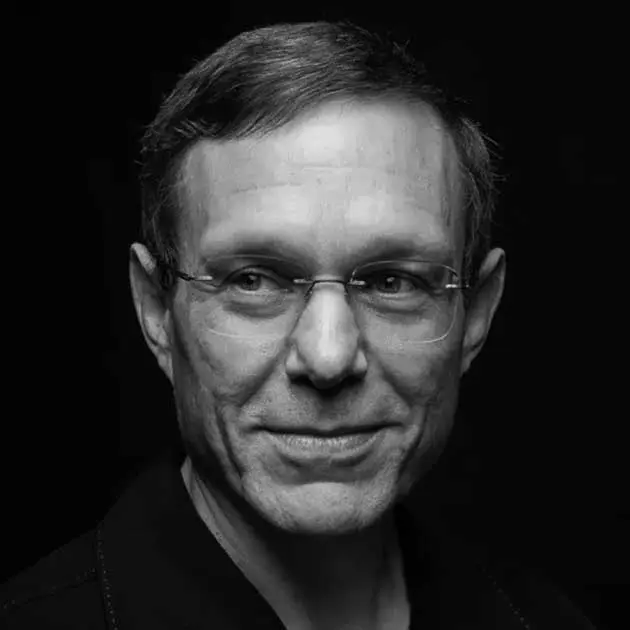
Abraham “Avi” Loeb is an Israeli‑American theoretical astrophysicist and cosmologist, the Frank B. Baird Jr. Professor of Science at Harvard University. Former chair of Harvard’s Astronomy Department and founding director of the Black Hole Initiative, Loeb has authored hundreds of peer‑reviewed papers across black holes, early‑universe cosmology, exoplanets, and SETI-adjacent topics. In recent years he has become a central public figure in debates about interstellar visitors—especially the interstellar object ʻOumuamua—and the search for technosignatures.
Primary links:
- Harvard profile: Harvard – Avi Loeb
- Personal site and publications: Avi Loeb – Personal
- Galileo Project (technosignature search): The Galileo Project
- Book: Extraterrestrial (2021): Extraterrestrial – Amazon
- ʻOumuamua background: ʻOumuamua – Wikipedia
Beginnings in “UFO/UAP” Adjacent Work
- Pre-2017: Loeb was already prominent in mainstream astrophysics (black holes, reionization, first stars). His careful forays into SETI were framed as technosignature astronomy rather than “UFO studies.”
ʻOumuamua (2017): After the discovery of the first known interstellar object, Loeb urged targeted searches for artificial signals and proposed that its unusual properties warranted considering non-natural explanations.
- December 2017: Advocated listening for radio emissions from ʻOumuamua; Green Bank Telescope observations detected no signals.
- October 2018: With postdoc Shmuel Bialy, proposed ʻOumuamua as a possible thin interstellar lightsail/solar sail in a high‑profile paper that catalyzed strong debate. Paper summary coverage: Harvard Gazette, object overview: ʻOumuamua – Wikipedia
Signature Themes and Contributions
ʻOumuamua’s “Six Anomalies”
Loeb highlighted multiple unusual aspects (asymmetric non‑gravitational acceleration without obvious outgassing; extreme aspect ratio; lack of a detectable coma; unusual reflectivity/thermal behavior; unexpected kinematics; spin/tumbling features). He argued these justified including “artificial origin” within the hypothesis set, not as a claim of proof.
- Debate context: Nature News coverage, object background: ʻOumuamua – Wikipedia
Bound Interstellar Object Searches (2018)
With students, Loeb proposed looking for ʻOumuamua‑like bodies gravitationally captured by the Solar System and identified candidate populations, expanding the search strategy beyond one‑off flybys.
Interstellar Meteors (2019–present)
- April 2019: With colleagues, reported evidence for the first interstellar meteor (later cataloged by U.S. Space Command as consistent with interstellar speeds). Loeb has used this as a springboard to argue that ocean‑recovered spherules could carry compositional signatures of extrasolar origin.
- Project and field recoveries: Galileo Project
Public Advocacy and Books
- Extraterrestrial (2021) made the case that science should openly evaluate technosignature hypotheses when data deviate from expectations, and that prior probabilities should not foreclose investigation. Book: Extraterrestrial – Amazon
The Galileo Project
Established to systematically collect high‑fidelity data (multi‑sensor imaging, spectroscopy, radar, and machine‑learning pipelines) to study UAP/technosignatures with open, publishable methods. Project: The Galileo Project
- Debate context: Nature News coverage, object background: ʻOumuamua – Wikipedia
- April 2019: With colleagues, reported evidence for the first interstellar meteor (later cataloged by U.S. Space Command as consistent with interstellar speeds). Loeb has used this as a springboard to argue that ocean‑recovered spherules could carry compositional signatures of extrasolar origin.
- Project and field recoveries: Galileo Project
- Extraterrestrial (2021) made the case that science should openly evaluate technosignature hypotheses when data deviate from expectations, and that prior probabilities should not foreclose investigation. Book: Extraterrestrial – Amazon
3I Atlas (3I-ATLAS) and Loeb’s Perspective
Note: You asked to include “the latest on 3iatlas and what Avi thinks about it.” As of now, “3I Atlas” (often stylized 3I-ATLAS) is used by some researchers to describe survey efforts/catalogs focused on Interstellar Interlopers (I=1st, 2nd, 3rd interstellar objects—hence “3I” as a generic label for the third known interstellar object) and ATLAS refers to the Asteroid Terrestrial-impact Last Alert System survey. The term can informally reference:
- The ATLAS survey’s role in finding fast-moving, non‑bound objects and pipelines that could flag future interstellar objects (like 2I/Borisov).
- Community initiatives to maintain a living catalog/atlas of “I‑objects” with orbital solutions, photometry, spectra, and physical modeling.
Where Loeb typically stands on such efforts:
- Strongly supportive of wide‑field, high‑cadence surveys that can rapidly identify interstellar candidates early, enabling prompt follow-ups (spectroscopy, radar ranging, IR photometry).
- Advocates a “preparedness” framework: once a candidate is flagged, immediately place assets (telescopes, radio arrays) on target and, if feasible, pursue rapid‑response missions or dedicated observations (he has publicly supported mission concepts to intercept future interstellar objects).
- Emphasizes open data and rapid publication to maximize community scrutiny.
If you can clarify the specific “3I‑ATLAS” program or provide a link, I can incorporate Loeb’s exact comments and the most recent dataset releases. For general ATLAS survey info: ATLAS Survey. For interstellar object catalogs and ephemerides: JPL Small-Body Database and IAU Minor Planet Center.
Obscure and Underreported Angles
- Unification agenda: Loeb consistently argues that technosignature work should be integrated with mainstream astrophysics—sharing instruments, pipelines, and standards—rather than siloed as “UFO studies.”
- Mission advocacy: He’s pushed for agile intercept missions for the next interstellar visitor (CubeSat/Smallsat architectures, pre‑planned trajectories) so we don’t miss decisive data like volatile composition and surface morphology.
- Early SETI framing: Long before ʻOumuamua, Loeb published on lightsails and planet‑ejection rates, laying intellectual groundwork for considering artificial probes as scientifically addressable hypotheses.
- Media calculus: Loeb consciously uses public communication to accelerate scientific attention on high‑leverage anomalies, betting that scrutiny (including criticism) increases the odds of new data.
Reception and Debate
- Supporters: Credit Loeb for expanding the Overton window—forcing serious, testable discussion of interstellar anomalies and technosignatures; praise his willingness to propose specific mechanisms and observational tests.
- Critics: Argue he sometimes overweights low‑prior hypotheses (e.g., artificial origin) and communicates possibilities too assertively for public audiences; point to natural explanations for ʻOumuamua’s acceleration (e.g., volatile‑poor outgassing or fractal/porous ices) that don’t require artifacts.
- Loeb’s reply: Science progresses by weighing all plausible models against data; dismissing low‑prior hypotheses a priori is unscientific—collect better data and let nature decide.
Context links:
- 2I/Borisov (second interstellar object): 2I/Borisov – Wikipedia
- Natural explanations debated: see coverage in Nature and Science news sections.
- JPL small-body resources: JPL SSD
Selected Book and Media List (Avi Loeb)
- Extraterrestrial: The First Sign of Intelligent Life Beyond Earth (2021) – Amazon
- Interstellar (2023) – follow‑up essays and arguments on interstellar anomalies and research programs; publisher page: Avi Loeb – Personal
- Frequent essays/interviews on Medium/Project Galileo pages: Galileo Project
Practical Implications for the UFO Timeline Project
- Data-first technosignature strategy: Loeb’s approach suggests building triggers with survey partners (ATLAS, Pan‑STARRS, ZTF, LSST/Vera Rubin) and a standing observation plan for spectral/radar follow‑ups.
- Catalog discipline: Maintain a living catalog of I‑objects with standardized metadata (phase angles, lightcurve parameters, nongrav accelerations, albedo estimates, spectra, and model fits).
- Mission readiness: Track rapid mission concepts to intercept the next ʻOumuamua‑class object.
Conclusion
Avi Loeb sits at a rare intersection: a top‑tier astrophysicist who treats interstellar anomalies as ripe for bold but testable hypotheses. From ʻOumuamua’s “six anomalies” to interstellar meteors and the Galileo Project’s multi‑sensor push, Loeb’s core message is methodological: widen the hypothesis space, instrument up, and let high‑quality data adjudicate. Whether future observations vindicate natural or artificial models, Loeb has already advanced the field by insisting that technosignatures deserve mainstream, standards‑based inquiry—exactly the ethos the UFO Timeline Project seeks to cultivate.
Timeline of events as of 10/16/2025
UFO Timeline Project
Avi Loeb — Mini Timeline
Technosignatures, ʻOumuamua, interstellar meteors, and the Galileo Project
Foundations in Mainstream Astrophysics
Publishes extensively on black holes, early universe, reionization, and exoplanets; early peer-reviewed forays into technosignatures (e.g., lightsails).
ʻOumuamua Arrives
1I/ʻOumuamua discovered by Pan-STARRS. Loeb advocates targeted radio observations; Green Bank Telescope listens—no signals detected—but sets a precedent for technosignature-focused follow-ups.
Lightsail Hypothesis
With Shmuel Bialy, proposes ʻOumuamua as a thin interstellar lightsail, citing non-gravitational acceleration without detectable outgassing and other anomalies. Also outlines searches for captured interstellar bodies.
Interstellar Meteor Claim
Reports evidence for the first interstellar meteor; later statements by U.S. Space Command support interstellar speeds. Advocates ocean recovery of spherules for compositional analysis.
Tags (comma-separated)
Avi Loeb, Harvard, astrophysics, cosmology, technosignatures, ʻOumuamua, interstellar objects, interstellar meteors, Galileo Project, ATLAS survey, Pan-STARRS, ZTF, LSST, solar sail, lightsail, Green Bank Telescope, FOIA not applicable, rapid intercept missions, 2I Borisov, scientific debate, Extraterrestrial book
Hashtags
#AviLoeb #Harvard #Astrophysics #Oumuamua #Interstellar #Technosignatures #GalileoProject #ATLAS #PanSTARRS #ZTF #LSST #Lightsail #SETI #SpaceScience #UAPScience
Share this post
Tags
Our blogs
Archive