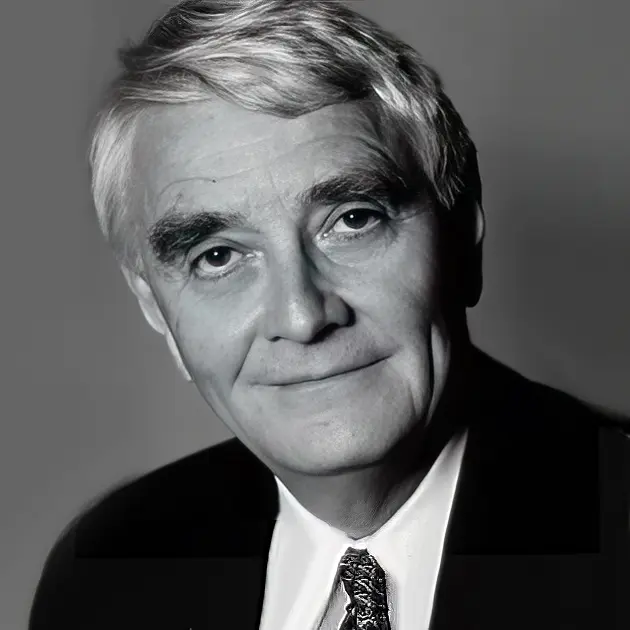

Budd Hopkins (June 15, 1931 – August 21, 2011) was an American abstract expressionist artist who became one of the most influential—and controversial—figures in modern ufology. Best known for popularizing the UFO abduction narrative through casework and bestselling books, Hopkins founded the Intruders Foundation and helped bring hypnotic regression and pattern analysis of “missing time” into the mainstream of UFO research. His work drew widespread media attention, inspired a generation of investigators, and sparked enduring debates about memory, hypnosis, and the sociology of extraordinary experiences. For a concise biography, see Budd Hopkins (Wikipedia) and a curated archive of his papers at the American Philosophical Society.
From the Studio to the Strange: An Artist Encounters “Missing Time”
- An accomplished painter and sculptor associated with the New York art scene, Hopkins exhibited widely; a sampling of his artistic career appears on Wikipedia.
- His turn toward ufology began after a 1964 sighting near Truro, Massachusetts, which set him on a path of collecting and analyzing witness narratives that seemed to feature “missing time”—a phrase he helped cement in the UFO lexicon. The broad outline of this shift is summarized on Wikipedia.
The Abduction Canon: Books, Cases, and Cultural Reach
Hopkins’ books helped define late-20th-century public understanding of the abduction phenomenon:
- Missing Time (1981): Introduced patterns of amnesia, screen memories, and nocturnal encounters that would become staples of abduction accounts. See Wikipedia.
- Intruders: The Incredible Visitations at Copley Woods (1987): Brought the “Kathie Davis”/Debbie Jordan case to public attention, with detailed regression sessions and alleged physical effects. Overview on Wikipedia.
- Witnessed: The True Story of the Brooklyn Bridge UFO Abductions (1996): The controversial Linda Cortile/Napolitano case, involving claims of multiple high-profile witnesses, became one of the most debated abduction narratives of the era. See Wikipedia.
- Sight Unseen (2003, with Carol Rainey): Attempted to link abduction patterns to alleged physical traces and “invisible” signatures, extending the thesis of real-world effects. Summary on Wikipedia.
His New York–based nonprofit, the Intruders Foundation, organized support groups, collected case files, and trained volunteers, positioning abduction research as a specialized subfield.
Obscure and Under-discussed Threads
- Art-world credibility as social capital: Hopkins’ stature as a respected artist gave him mainstream media access unusual for UFO researchers in the 1970s–90s, facilitating coverage on national television and in major magazines (context on Wikipedia).
- Early pattern-coding of narratives: Long before contemporary qualitative analysis software, Hopkins maintained structured notes on recurring motifs—medical procedures, reproductive themes, family lineage—an approach later mirrored by investigators like David Jacobs.
- The “scar catalog”: Hopkins informally collected descriptions and photos of small, geometric scars (often on shins, thighs, or behind the ears) that witnesses associated with abduction episodes. While anecdotal and methodologically controversial, this effort reflected his drive to correlate testimony with physical indicators.
- Networks and cross-pollination: Hopkins informally coordinated with psychiatrists, hypnotherapists, and researchers to compare notes on suggestibility, post-hypnotic recall, and trauma, attempting to build a quasi-clinical ecosystem around experiencers.
- The “Brooklyn Bridge” paper trail: Beyond his 1996 book, Hopkins compiled correspondence and affidavits from purported witnesses tied to the Linda Cortile case. Portions of his investigative records and correspondence are now preserved at the American Philosophical Society.
Method and Critique: Hypnosis, Memory, and Ethics
Hopkins’ reliance on hypnotic regression and leading questions became a central flashpoint:
- Hypnosis concerns: Memory researchers and skeptics warned that regression risks confabulation and false memories, particularly when conducted by non-clinicians with strong prior beliefs. Critical perspectives are summarized in mainstream and skeptical venues referenced on Wikipedia.
- Carol Rainey’s inside view: Hopkins’ former partner and co-author, filmmaker Carol Rainey, later published critical essays describing methodological drift, weak vetting of witnesses, and a tendency to prioritize compelling narratives over disconfirming evidence. See Rainey’s critiques summarized on Wikipedia and in media linked there.
- The Cortile/Napolitano debate: The Brooklyn Bridge case drew scrutiny over verification of VIP witnesses and the provenance of letters and testimonies. Coverage and analysis are collected in the Wikipedia entry on the case.
Despite critiques, many experiencers credited Hopkins with empathetic support and with legitimizing their trauma narratives. He popularized the idea that abductions could be multigenerational and that “screen memories” might hide disturbing encounters—concepts that shaped public and media treatment of the subject through the 1990s.
Influence on Culture and Policy Discourse
- Media footprint: Intruders and Witnessed fueled TV specials, talk-show debates, and docudramas, embedding abduction motifs—missing time, medical exams, hybrid programs—into popular culture. Background on Wikipedia.
- Experiencer communities: Through the Intruders Foundation, Hopkins fostered peer groups and a language of validation that many found therapeutic, a legacy sustained by later support networks (see Intruders Foundation).
- Archival legacy: Hopkins’ case files, correspondence, and research artifacts housed at the American Philosophical Society remain a resource for historians of science, cultural studies scholars, and ufologists.
How Hopkins Changed the Abduction Conversation
- From isolated tales to a “pattern”: By clustering similar features across witnesses, Hopkins reframed isolated stories as a coherent, recurring phenomenon.
- From ridicule to trauma-informed framing: He advanced the idea that many experiencers exhibit PTSD-like symptoms deserving compassion and serious inquiry, even as clinical researchers contested the etiology of those memories.
- From silence to support structures: Formalized hotlines, investigator trainings, and support meetings gave experiencers an avenue outside of sensational media.
Conclusion: A Legacy Written in Contested Memories
Budd Hopkins professionalized the abduction narrative—and in doing so, he also crystallized the core controversies that define it. His pattern-finding instincts, organizational efforts, and empathetic rapport with witnesses brought “missing time” into the cultural mainstream and gave countless experiencers a language for their stories. Yet the very tools he used—especially hypnotic regression—sit at the center of enduring scientific disputes about memory reliability and investigator influence. Hopkins’ legacy is therefore double-edged: he expanded the conversation and supported marginalized voices, while also illustrating how methodology can shape the phenomena we think we’re observing. To study Hopkins is to confront the hardest problem in ufology—how to honor testimony, search for corroboration, and avoid turning questions into answers by the way we ask them.
For further reading and primary materials, start with Budd Hopkins (Wikipedia), the Intruders Foundation, and the archival guide at the American Philosophical Society.
Tags: Budd Hopkins, Intruders Foundation, UFO abductions, missing time, hypnotic regression, Linda Cortile, Brooklyn Bridge abduction, Debbie Jordan, Intruders (book), Witnessed, Sight Unseen, abduction research ethics, memory reliability, screen memories, PTSD and experiencers, hybrid program motif, UFO culture 1980s–1990s, American ufology, archival sources, American Philosophical Society
Share this post
Tags
Our blogs
Archive