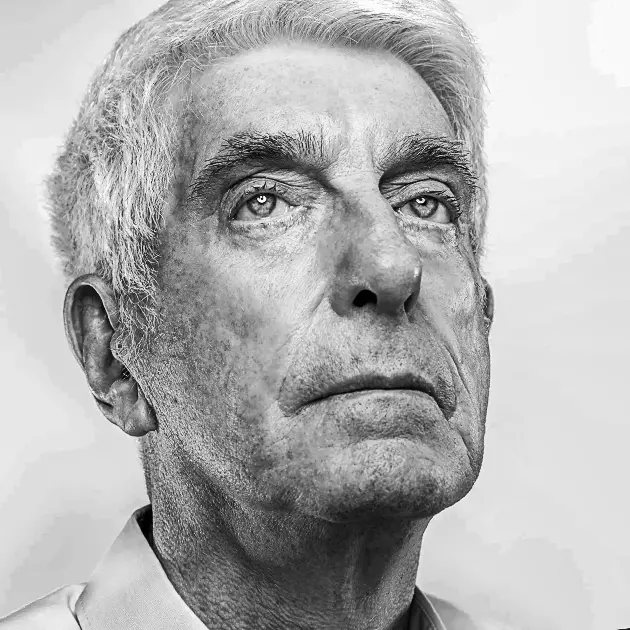
Jacques Fabrice Vallée (born September 24, 1939) is a polymath whose career spans astronomy, computer science, venture capital, and ufology. Splitting time between San Francisco and Paris, he helped pioneer early space data systems and the internet’s antecedents while becoming one of the most influential theorists of UFOs. Vallée’s work challenges simplistic explanations, arguing for a data-centric, systems-level approach to anomalous phenomena. For a list of publications, see book list below.
From Paris Observatory to ARPANET
- Early astronomy: Vallée began at the Paris Observatory, where he worked as a professional astronomer.
- Mapping Mars: In 1963, he co-developed one of the first computerized maps of Mars for NASA, an early milestone in planetary data processing that foreshadowed today’s computational cartography.
- The ARPANET era: At SRI International’s Augmentation Research Center under Douglas Engelbart, Vallée worked on the Network Information Center during the formative years of ARPANET, a key predecessor to the modern internet.
These experiences shaped his later approach to ufology: build datasets, model systems, and focus on information flows, not only on isolated events.
A Different Lens on UFOs: Beyond ETH
Vallée entered ufology while sympathetic to the scientific legitimacy of the extraterrestrial hypothesis (ETH). Over time, he expanded the hypothesis-space:
- Control System hypothesis: Anomalies may function like a cultural or informational “control system,” nudging human beliefs and behaviors over time (see his books summarized on Wikipedia).
- Interdimensional/extradimensional possibilities: Rather than spacecraft from other planets, some phenomena may represent interactions with alternate realities, nonhuman intelligences, or unknown natural systems that intersect with human perception and environment.
- High-strangeness as signal, not noise: Vallée highlighted the very elements others dismissed—bizarre coincidences, psychic spillover, folkloric motifs—as integral data. Works like Passport to Magonia integrate UFO reports with global folklore, arguing shared structures point to a deeper underlying mechanism.
Key works and arcs (overviews on Wikipedia):
- Passport to Magonia (1969): Cross-links UFO narratives with centuries of folklore.
- The Invisible College (1975) and Messengers of Deception (1979): Examines social dynamics, disinformation, and contactee movements.
- Dimensions, Confrontations, Revelations (1988–1991): Synthesizes high-strangeness typologies and liminal encounters.
- Forbidden Science (multi-volume diaries): Primary-source diaries offering inside views on cases, researchers, and institutional dynamics.
- Trinity: The Best-Kept Secret (with Paola Harris, 2021): Investigates an alleged 1945 crash case near the Trinity test site—controversial and debated among researchers.
In Culture and On Screen
Vallée inspired the French scientist “Claude Lacombe” in Steven Spielberg’s film Close Encounters of the Third Kind. He later made advisory contributions to media that sought a more serious treatment of the subject, helping popularize a data-centric, witness-respectful approach.
Investigator, Compiler, Architect of Data
- Catalogs and typologies: Vallée co-developed some of the earliest machine-readable UFO catalogs, pushing for standardized fields (date/time, witness type, physical effects) to enable statistical analysis. His casework emphasized “CE-II” features—electromagnetic interference, physiological effects, ground traces—alongside narrative anomalies.
- Methodological pluralism: He urged combining hard-physics hypotheses with cognitive science, anthropology, and information theory—decades before “interdisciplinary UAP studies” became fashionable.
- Information ecosystems: Drawing on his ARPANET background, Vallée analyzed how UFO data moves—through intelligence channels, media, and communities—highlighting feedback loops and disinformation vectors.
Obscure and Underappreciated Threads
- Early computerization of UFO data: Vallée and colleagues encoded sightings on mainframes to run statistical queries—uncommon at the time and foundational for later databases.
- Magonia as a unifying framework: By mapping UFO motifs to fairy lore, Marian apparitions, and trickster archetypes, Vallée positioned ufology within a continuum of human-anomaly interaction rather than as a post-1947 novelty.
- Intelligence community overlap: Vallée wrote about contact with government and private intelligence actors, warning that deception operations can contaminate datasets—an often-cited but still under-modeled risk in modern UAP discourse.
- Venture capitalist with a lab notebook: As a Silicon Valley investor and technologist, he maintained unusual access to engineers, pilots, and sensor specialists—his Forbidden Science diaries chronicle candid technical conversations rarely captured in formal reports.
- The “control system” as testable: Vallée proposed that if a control mechanism is informational, we should see temporally structured waves, motif recycling, and “directed ambiguity”—features measurable in large, longitudinal datasets.
Why Vallée Still Matters
- Expanding the hypothesis space: Vallée legitimized non-ETH models without dismissing ETH—inviting testable, multi-model research rather than belief contests.
- Data-first, culture-aware: He treats witness testimony as data embedded in culture, subject to manipulation—but still carrying signal.
- Method over ideology: His enduring message is epistemic humility, interdisciplinary methods, and rigorous archiving.
Getting Started with Vallée
- Official website: Jacques Vallée — research, publications and biography
- Biography and bibliography: Jacques Vallée (Wikipedia)
- ARPANET/SRI context: SRI Augmentation Research Center, Internet History
- Paris Observatory background: Observatoire de Paris
- Close Encounters inspiration: AFI Catalog entry
Books Authored by Jacques Vallée
- Anatomy of a Phenomenon: Unidentified Objects in Space – A Scientific Appraisal (1965)
- Challenge to Science: The UFO Enigma (1966) (with Janine Vallée)
- Passport to Magonia: From Folklore to Flying Saucers (1969)
- The Invisible College: What a Group of Scientists Has Discovered About UFO Influence on the Human Race (1975)
- Messengers of Deception: UFO Contacts and Cults (1979)
- Dimensions: A Casebook of Alien Contact (1988)
- Confrontations: A Scientist's Search for Alien Contact (1990)
- Revelations: Alien Contact and Human Deception (1991)
- Forbidden Science: Journals 1957-1969 (1992) (First volume of his multi-volume diaries)
- Forbidden Science, Volume Two: Journals 1970-1979 (1994)
- Forbidden Science, Volume Three: Journals 1980-1989 (2008)
- Forbidden Science, Volume Four: Journals 1990-1999 (2016)
- Forbidden Science, Volume Five: Journals 2000-2009 (2019)
- Five Arguments Against the Extraterrestrial Origin of Unidentified Flying Objects (1997) (Originally a paper, often published as a short book/monograph)
- UFO Chronicles of the Soviet Union: A Cosmic Samizdat (1999) (with Paola Harris)
- Confrontations: A Scientist's Search for Alien Contact (2008) (Revised edition)
- Area 81: The Story of the Trinity UFO Crash (2019) (with Paola Harris)
- Trinity: The Best-Kept Secret (2021) (with Paola Harris)
Note: This list primarily focuses on his non-fiction works related to ufology and science. He has also authored scientific papers, articles, and some speculative fiction under pseudonyms. The "Forbidden Science" series comprises his personal journals, offering unique insights into his research and interactions over decades.
Conclusion: The Cartographer of the Liminal
Jacques Vallée reframed UFOs not as a single mystery with a single answer, but as a multidomain problem: physical traces, psychological states, cultural symbols, and information warfare intertwine in a living system. From Mars maps and ARPANET nodes to Magonia’s folklore and modern UAP debates, his through-line is constant—build better maps. Map the data, the witnesses, the symbols, the hoaxes, the incentives, and the mechanisms by which stories spread. Whether future answers are extraterrestrial, interdimensional, or something stranger still, Vallée’s legacy is a way of seeing: resist premature certainty, model the system, and let the patterns—not our preferences—tell us what is real.