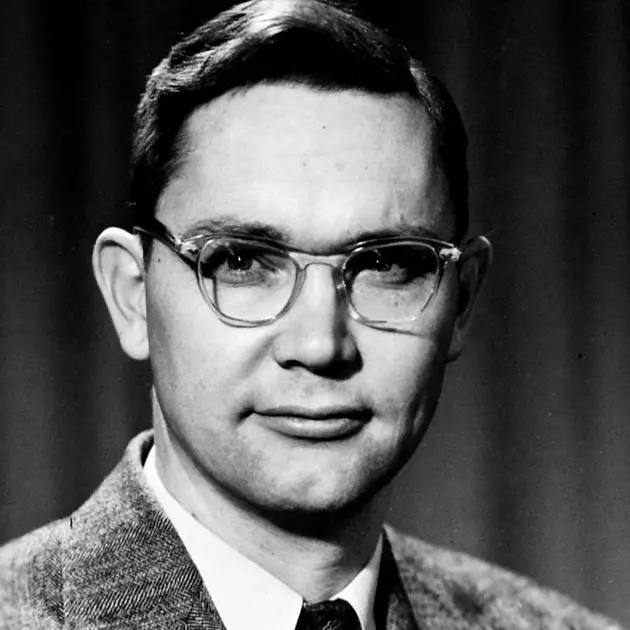

James Edward McDonald (1920–1971) was a senior physicist at the University of Arizona's Institute of Atmospheric Physics and a member of the National Academy of Sciences' panel on weather modification. In the late 1960s he became the most scientifically credentialed voice arguing that UFO reports deserved serious study — and he paid for it professionally. See Wikipedia for a general biography.
From Cloud Physics to UFO Fieldwork
- Expertise that mattered: McDonald was a specialist in cloud physics, optics and atmospheric refraction — exactly the conventional explanations (mirages, temperature inversions, ball lightning) most often used to dismiss sightings. He was uniquely equipped to test them.
- Field interviews: Beginning around 1966 he personally interviewed hundreds of witnesses, from airline crews to police officers, often driving across the Southwest on his own time and money.
- Blue Book files: In 1966 he examined Project Blue Book records at Wright-Patterson AFB and concluded the explanations were frequently scientifically indefensible.
The 1968 Congressional Symposium
On July 29, 1968, McDonald testified at the House Committee on Science and Astronautics' Symposium on Unidentified Flying Objects, stating that the extraterrestrial hypothesis was the "least unsatisfactory" explanation for the best cases. He presented the 1957 RB-47 radar/visual case and the 1966 Portage County police chase as examples that resisted conventional analysis.
Obscure and Underappreciated Threads
- He was a sharp critic of the Condon Committee and J. Allen Hynek alike — accusing Hynek privately of years of timidity while on the Air Force payroll.
- He re-investigated the 1957 RB-47 case in detail, tracking down the crew years later; his work made it one of the most cited radar/visual cases in the literature.
- Opponents used his separate congressional testimony on supersonic transport (SST) ozone damage — science later vindicated — to mock him with his UFO interests.
- His extensive personal papers, including case files and correspondence, are held at the University of Arizona Special Collections.
- He died in June 1971 at age 51; his death was ruled a suicide, a tragic end often cited as a measure of the personal cost of the subject.
Why McDonald Still Matters
McDonald demonstrated that conventional atmospheric explanations must be tested, not assumed. His insistence on witness interviews, physical plausibility and scientific transparency anticipates the dual-axis reasoning of the Verg Credibility Matrix: measure both how anomalous a case is and how plausible the debunking really is.