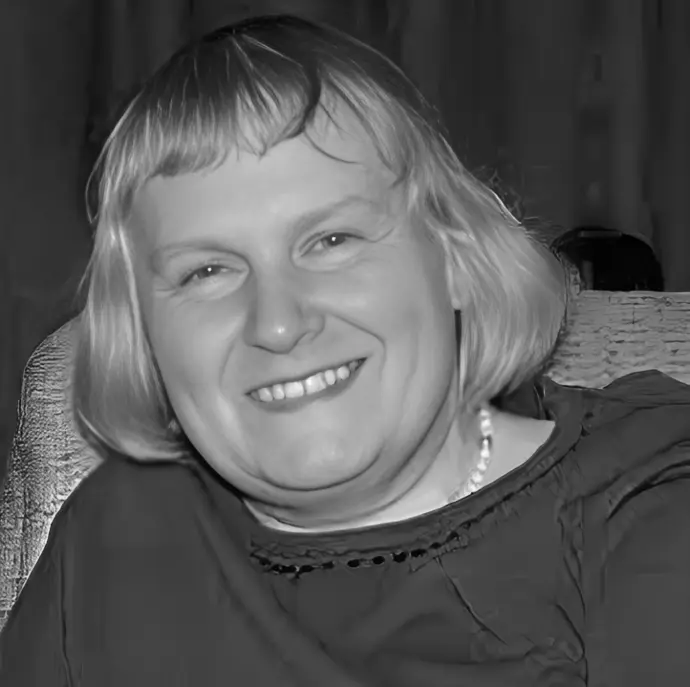

Jenny Randles is a British ufologist and author whose rigorous, psychologically attuned approach helped define a distinctly UK voice in the study of anomalous phenomena. Best known as former Director of Investigations for the British UFO Research Association (BUFORA) from 1982 to 1994, she has authored more than 50 books spanning UFOs, the paranormal, and time anomalies, shaping debates with a rare blend of skepticism and open-mindedness. For a concise career overview and bibliography, see Jenny Randles (Wikipedia) and Encyclopedia.com profile.
Early Path: From Investigator to Thought Leader
Randles emerged in the 1970s UK scene as a careful field investigator and editor, helping professionalize case intake and training within BUFORA. She brought a methodical triage mindset: separate conventional stimuli from genuinely anomalous reports, leverage standardized witness protocols, and foreground psychological context without discarding hard anomalies. Her leadership tenure at BUFORA (1982–1994) and sustained publishing output are documented on Wikipedia and in this detailed Encyclopedia.com entry.
The Prolific Author: UFOs, Anomalies, and Time
Randles’ bibliography runs from her early co-authored volume, UFOs: A British Viewpoint (1979), to works that probe abductions, physical traces, “men in black,” and public-policy implications of sightings. She broadened into crop circles, ESP, afterlife and survival claims, spontaneous human combustion, and time anomalies—culminating in books like Breaking the Time Barrier and Time Storms. Representative works and critical reception are summarized on Wikipedia and Encyclopedia.com.
Key themes she emphasized:
- UFOs as a mixed bag: most cases resolve conventionally, but a residue remains worthy of scientific study (Wikipedia).
- The importance of perception, memory, environment, and cultural narrative in shaping extraordinary reports (Encyclopedia.com).
Obscure and Underappreciated Contributions
- The Oz Factor: Randles is closely associated with the “Oz Factor,” a state many witnesses describe during encounters—time distortion, silence, and a dreamlike “bubble” where normal reality seems suspended. See Wikipedia for background.
- Window/Flap Areas: She tracked recurring geographic clusters of reports, pushing beyond one-off events to spatiotemporal pattern analysis (noted across her bibliography on Wikipedia).
- Rendlesham Forest: Randles was an early investigator and co-author of Sky Crash, later adopting a more skeptical, prosaic interpretation of the case dynamics and witness perceptions (Wikipedia).
- Science-first ufology: In Science and the UFOs (with Peter Warrington), she criticized ufology’s failings while arguing some cases merit rigorous, non-sensational study (Wikipedia; Encyclopedia.com).
- Media and public education: She contributed to UK media (including documentary series work) to bring evidence-centered discussion to a broad audience—summarized on Wikipedia.
Method and Mindset
Randles consistently argued for:
- Standardized reporting and careful witness interviewing (BUFORA protocols during her tenure; see Wikipedia).
- Integrating psychology with physical inquiry—treating trace evidence and instrumented data as crucial while accounting for human factors (Encyclopedia.com).
- A pluralistic hypothesis space: considering atmospheric, psychological, cultural, and potentially unknown natural mechanisms alongside technological or extraterrestrial hypotheses (Wikipedia).
Why She Matters
Randles helped normalize disciplined agnosticism in British ufology. She neither embraced credulity nor defaulted to debunking; instead, she cultivated protocols, archives, and analytic habits that allowed the UK community to question better. Her work demonstrates how to keep an open mind, test claims, and accept that “we don’t know yet” can be a scientifically productive stance. Biographical and bibliographic details: Wikipedia, Encyclopedia.com profile.
Conclusion: A Legacy of Clear Thinking in Murky Terrain
Jenny Randles’ enduring contribution is methodological. She showed that careful interviewing, psychological insight, and patient pattern analysis can extract signal from a noisy subject. Her articulation of the Oz Factor, attention to window areas, and willingness to revise early interpretations—Rendlesham included—model intellectual humility. In a field that tempts both believers and skeptics into caricature, Randles’ work points to a steadier path: ask sharper questions, gather better data, and let the evidence—not the narrative—take the lead. For an accessible overview of her career and major works, see Jenny Randles (Wikipedia) and Encyclopedia.com.
Tags: Jenny Randles, BUFORA, British ufology, Oz Factor, window areas, Rendlesham Forest, Science and the UFOs, UFO investigation, anomalous phenomena, crop circles, ESP, time anomalies, spontaneous human combustion, Fortean research, UK UFO history, investigator training, psychological aspects of UFOs, witness perception, UFO literature, UFO methodology
Share this post
Tags
Our blogs
Archive